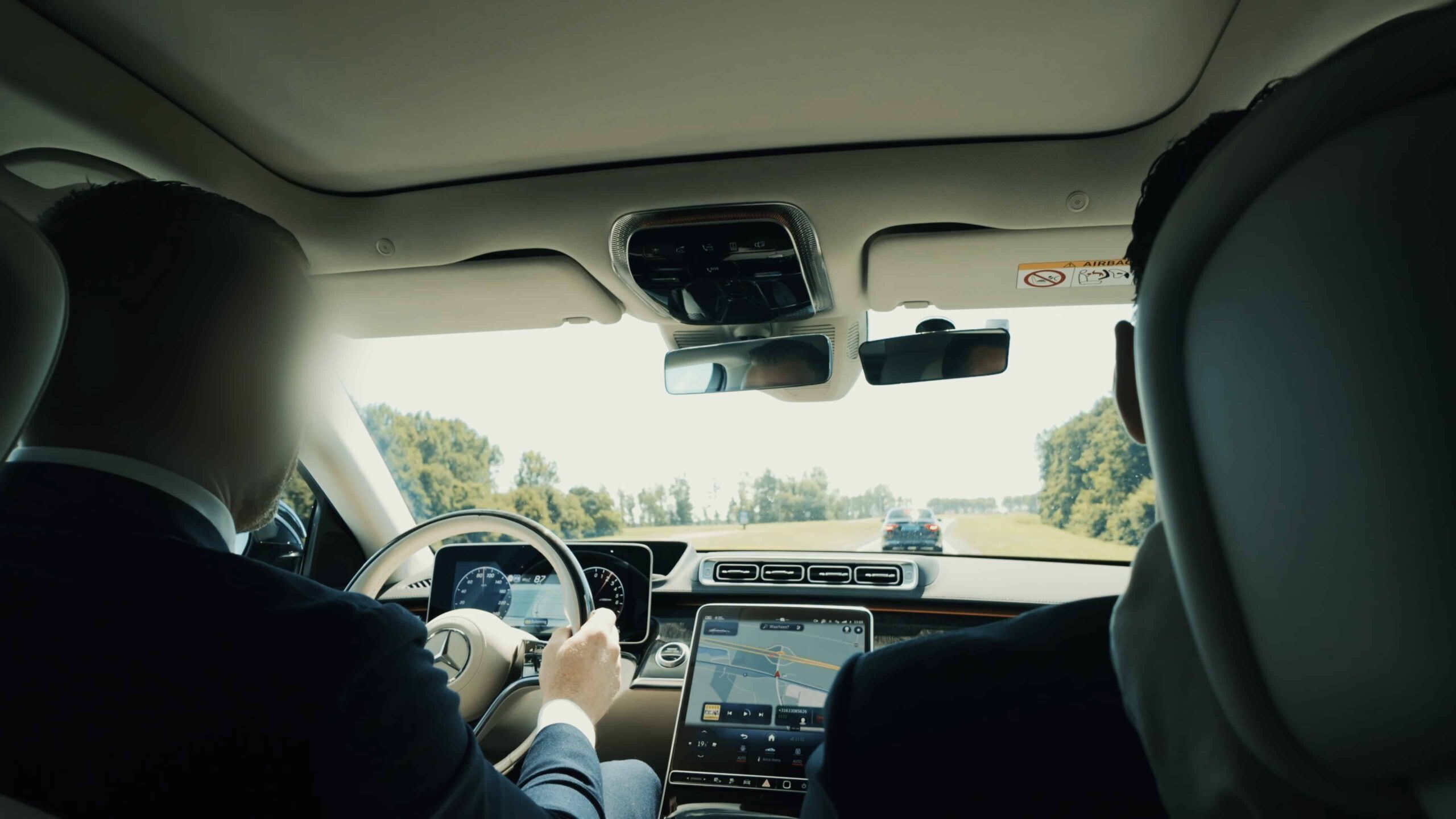
Emergency Decision-Making on the Road: How Security Drivers Are Trained to React
In professional security transportation, emergencies rarely announce themselves. There is no warning siren, no countdown clock, and no opportunity to pause and ask what to do next. Instead, critical decisions must be made in seconds—sometimes fractions of a second—while moving at speed, surrounded by unpredictable variables.
In professional security transportation, emergencies rarely announce themselves. There is no warning siren, no countdown clock, and no opportunity to pause and ask what to do next. Instead, critical decisions must be made in seconds—sometimes fractions of a second—while moving at speed, surrounded by unpredictable variables.
This is where trained security drivers separate themselves from ordinary chauffeurs or rideshare operators. Their effectiveness does not come from equipment alone. It comes from disciplined thinking, emotional control, and practiced judgment under pressure.
Why Emergency Decision-Making Is the Core of Security Driving
Unlike traditional driving roles, security drivers are responsible for far more than getting a passenger from point A to point B. They are tasked with protecting lives while navigating uncertainty. Traffic conditions, human behavior, environmental factors, and situational risk can change instantly.
In an emergency, hesitation is dangerous—but so is panic. The goal is not speed or aggression. The goal is correct action, taken immediately, with minimal exposure to risk.
Security drivers are trained to think in outcomes, not reactions.
Training the Mind Before Training the Hands
One of the first principles taught to professional security drivers is that mental readiness precedes physical skill. Before learning evasive maneuvers or emergency positioning, drivers are trained to develop a calm, analytical mindset.
This includes:
- •- Remaining emotionally neutral under stress
- •Avoiding tunnel vision
- •Processing multiple inputs simultaneously
- •Prioritizing passenger safety above all else
Training scenarios are designed to overload the senses—noise, time pressure, conflicting information—so that drivers learn to function effectively even when conditions are chaotic.
Situational Awareness: Seeing Problems Before They Explode
Emergency decision-making often begins long before an emergency occurs. Professional security drivers are trained to maintain continuous situational awareness.
This means actively scanning for:
- •- Abnormal traffic behavior
- •Sudden changes in pedestrian movement
- •Vehicles following too closely or too consistently
- •Unusual congestion patterns
- •Environmental hazards such as construction bottlenecks
By recognizing subtle warning signs early, drivers often avoid emergencies entirely. When avoidance is not possible, early recognition gives them precious extra seconds to act.
Decision Hierarchy Under Pressure
When an emergency unfolds, security drivers follow a strict mental hierarchy. This hierarchy is ingrained through repetition so it becomes instinctive.
**Preserve Life** Passenger safety is the top priority—always.
**Create Distance From the Threat** Whether the threat is a reckless driver, hostile individual, or environmental hazard, distance reduces risk.
**Maintain Control** Speed without control creates more danger. Controlled movement is critical.
**Avoid Escalation** Security drivers are trained to de-escalate, not provoke.
Every decision is filtered through this hierarchy in real time.
Managing Stress Without Freezing or Overreacting
One of the greatest dangers in an emergency is cognitive overload. Under stress, untrained drivers may freeze, make impulsive decisions, or fixate on a single threat while ignoring others.
Security drivers are trained to regulate their physiological response to stress. Techniques include:
- •- Controlled breathing to stabilize heart rate
- •Mental checklists to maintain clarity
- •Habitual scanning patterns to prevent fixation
This training ensures that even in high-pressure moments, decisions remain deliberate rather than emotional.
Judgment Over Instinct
Human instinct is not always reliable in emergencies. The natural urge to brake hard, swerve sharply, or confront perceived danger can increase risk.
Professional security drivers are trained to override instinct with judgment.
For example:
- •- Abrupt braking may expose passengers to rear-end collisions.
- •Aggressive maneuvers may draw unwanted attention.
- •Emotional responses can escalate situations unnecessarily.
Training replaces instinctive reactions with conditioned responses that prioritize safety and control.
Adapting When No Script Fits the Situation
No two emergencies are identical. While training provides frameworks, security drivers must constantly adapt to variables that cannot be scripted.
This includes:
- •- Changing road conditions
- •Unpredictable actions by other drivers
- •Shifting risk levels in different environments
- •Passenger-specific considerations
Professional drivers are taught to think dynamically rather than follow rigid rules. The ability to adapt intelligently is one of the most valuable skills in security transport.
Communication Under Pressure
Decision-making does not occur in isolation. Security drivers are trained to communicate clearly and calmly—both internally and externally—during emergencies.
This includes:
- •- Reassuring passengers without revealing stress
- •Issuing concise verbal cues when necessary
- •Coordinating actions without distraction
Clear communication reinforces trust and prevents panic, which is essential for maintaining control of the situation.
Learning From After-Action Analysis
Training does not end once a situation is resolved. Professional security drivers regularly review scenarios—real and simulated—to analyze decisions made under pressure.
These reviews focus on:
- •- What signals were missed or detected early
- •Whether decisions aligned with priority hierarchy
- •How stress was managed
- •What alternative actions may have reduced risk further
This continuous learning process sharpens judgment and prepares drivers for future challenges.
Why Human Judgment Matters More Than Technology
Technology can support security transport, but it cannot replace human decision-making. Sensors, systems, and alerts provide information—but interpretation and action remain human responsibilities.
In moments where milliseconds matter, it is the driver's training, discipline, and judgment that determine outcomes.
The true strength of professional security transportation lies not in equipment, but in the person behind the wheel.
Conclusion: The Invisible Skill That Protects Lives
Emergency decision-making is the unseen foundation of secure transportation. It is developed through rigorous training, repeated exposure to stress scenarios, and a commitment to disciplined thinking.
When a security driver reacts correctly under pressure, passengers may never realize how close a situation came to becoming dangerous—and that is exactly the point.
Safety, when done right, is quiet, controlled, and invisible.
📞 **Call:** (417) 895-8733 📧 **Email:** [email protected]
🌐 **Book Secure Transport:** https://prestigehaul.com
Ready to Experience Elite Security Transport?
Contact Prestige Haul today for discreet, professional, and secure transportation in Springfield, MO.