Security & Transport Insights
Expert perspectives on private security, luxury transportation, and professional safety in Springfield, MO

The Retention Calculus: How Elite Security Transport Organizations Build the Economics of Long-Term Client Loyalty
In premium executive transport, the most durable competitive advantage is not speed or price — it is the accumulated trust that transforms a single engagement into an enduring professional relationship. Understanding the economics of that transformation reveals why elite organizations invest so deliberately in consistency.

The Route as Strategic Asset: How Elite Security Transport Engineers Navigation as Integrated Decision Architecture
In professional security transport, route selection represents far more than directional choice—it functions as a strategic decision architecture integrating geography, timing, contingency planning, and client requirements into operational certainty.

The Reliability Premium: How Elite Security Transport Organizations Convert Operational Consistency Into Measurable Client Value
In premium executive transport, reliability is not a feature — it is the product itself. This article examines how elite organizations build the structural conditions that make consistent performance economically rational, and why that consistency compounds into durable competitive advantage.

The Definition Problem: How Elite Security Transport Organizations Construct and Maintain Standards of Qualification
In professional security transport, the challenge is not merely identifying qualified personnel but defining what qualification means in the first place. Elite organizations succeed by building evaluative frameworks that translate abstract competencies into observable, measurable criteria.

The Measurement Standard: How Elite Security Transport Organizations Define and Internalize Performance as Organizational Knowledge
In elite executive transport, performance is not merely observed — it is systematically defined, measured, and embedded into the organization's operating culture. The discipline of knowing what excellence looks like, and building structures that make that knowledge actionable, separates organizations that sustain quality from those that only aspire to it.

The Translation of Risk: How Professional Security Transport Converts Abstract Threat Assessment Into Operational Reality
Elite security transport organizations must bridge the gap between conceptual risk frameworks and the granular realities of route execution. The capacity to translate theoretical threat models into actionable operational decisions distinguishes professional services from superficial security theater.

The Reputational Balance Sheet: How Elite Service Organizations Convert Operational Discipline Into Durable Competitive Capital
In premium service industries, reputation is not a byproduct of marketing — it is the accumulated residue of operational decisions made consistently over time. Understanding how elite organizations build and protect reputational capital reveals why discipline, not differentiation, is the true engine of long-term competitive advantage.

The Synchronization Imperative: How Elite Security Transport Organizations Engineer Temporal Precision as Strategic Infrastructure
The most sophisticated security transport organizations recognize that scheduling precision represents not a logistical afterthought but a fundamental service architecture that directly shapes client outcomes. This approach transforms time coordination from administrative function into strategic capability.

The Preparation Dividend: How Pre-Mission Intelligence Converts Uncertainty Into Operational Certainty
In executive security transport, reliability is not a product of talent alone — it is the direct output of structured preparation. The organizations that consistently deliver certainty do so because they have built intelligence-gathering into the operational sequence long before a vehicle moves.

The Fleet as Operational Foundation: How Vehicle Selection and Preparation Architecture Define Elite Security Transport
In professional security transport, the vehicle represents far more than conveyance—it functions as the primary operational platform upon which service delivery depends. The strategic approach to fleet composition and preparation protocols reveals the depth of an organization's commitment to reliability.

The Cost of Variance: Why Operational Consistency Is the True Measure of Value in Executive Transport
In premium service environments, the real economic argument is not about price — it is about the cost of failure. Understanding how operational consistency eliminates hidden costs reveals why elite executive transport is not a luxury but a calculated professional investment.

The Relationship Ledger: How Elite Security Transport Organizations Build and Sustain Long-Term Client Trust
In premium executive transport, trust is not declared — it is accumulated. Each engagement either deposits into or withdraws from a relationship ledger that determines whether a client returns, refers, and relies. Understanding how elite organizations manage this ledger is the foundation of durable service excellence.

The Calibration Challenge: How Elite Security Transport Organizations Preserve Service Integrity Through Growth
Growth presents a paradox for premium service organizations: the very expansion that signals market validation threatens to dilute the personalized attention and operational precision that created initial success. Elite security transport companies resolve this tension through deliberate structural choices that embed quality into scalable systems.

The Institutional Eye: How Elite Transport Organizations Build Environmental Scanning Into Their Operational Structure
In elite executive transport, environmental awareness is not a personal trait — it is an organizational discipline. The most capable services build scanning protocols, shared situational intelligence, and structured debriefing cycles into their operational DNA, ensuring that awareness functions as a property of the institution rather than a characteristic of any single driver.

The Decision Threshold: How Professional Security Transport Navigates Ambiguous Risk in Real Time
When threat indicators are incomplete or evolving mid-mission, professional security transport relies on structured decision frameworks that transform uncertainty into actionable judgment. The quality of these frameworks determines whether ambiguity leads to paralysis or precision.

The Readiness Standard: How Elite Security Transport Organizations Manage Human Performance as Operational Infrastructure
In elite executive and security transport, the vehicle is only one component of the service. The professional behind the wheel — their alertness, physical condition, and psychological readiness — constitutes the other half of the operational equation. This article examines how serious transport organizations treat human performance not as a personal matter but as a managed, measurable, and mission-critical asset.

The Signal Discipline: How Elite Security Transport Organizations Engineer Communication as Operational Infrastructure
In professional security transport, communication quality determines operational integrity. The most sophisticated organizations treat information exchange not as spontaneous interaction but as engineered infrastructure designed for clarity, speed, and precision under pressure.

The Geometry of Accountability: How Elite Transport Organizations Sustain Standards Through Internal Governance
In the most disciplined professional transport organizations, standards are not enforced from above — they are maintained from within. The architecture of internal accountability defines how elite services sustain excellence across every engagement, every driver, and every mile.

The Perceptual Standard: How Elite Executive Transport Engineers the Sensory Architecture of Client Experience
The most sophisticated professional transport organizations recognize that client experience is not merely structural but fundamentally perceptual, requiring deliberate engineering of every sensory dimension that shapes client awareness, confidence, and professional readiness throughout the service engagement.

The Value of Predictability: How Consistent Service Delivery Creates Measurable Economic Advantage for Executive Clients
In premium service environments, predictability is not a passive quality — it is an active economic asset. When executive clients can rely on a professional chauffeur service to perform identically across every engagement, they gain something that cannot be purchased through any single transaction: the freedom to allocate their attention elsewhere.

The Design of Transition: How Elite Transport Services Engineer the Intervals Between Destination and Departure
Professional transport organizations recognize that the moments between arrival and departure represent designed experiences, not operational gaps. The quality of these transitions directly influences client readiness, cognitive state, and professional effectiveness.

The Profile Imperative: How Client-Specific Operational Knowledge Transforms Preparation Into Reliable Service
In premium executive transport, reliability is not a product of speed or technology alone — it is the direct result of accumulated, client-specific operational knowledge. The organizations that consistently deliver at the highest level do so because they have built systematic processes for learning, retaining, and applying detailed understanding of each client's professional world.
The Live Coordination Model: How Real-Time Communication Defines Adaptive Excellence in Executive Security Transport
In professional security transport, the capacity to coordinate information dynamically across driver, dispatch, and client during active missions separates reactive operations from truly adaptive service. Real-time communication architecture determines whether disruption becomes delay or merely adjustment.

The Transmission of Culture: How Elite Transportation Organizations Sustain Professional Standards Across Generations of Staff
In elite transportation organizations, service excellence is not a policy enforced from above but a culture transmitted from within — carried forward by each generation of professionals who internalize its standards and pass them on. Understanding how this transmission occurs reveals why some organizations sustain distinction over decades while others plateau after initial success.

The Architecture of Silence: How Elite Executive Transport Services Build Confidentiality Into Organizational Structure
In elite executive transport, confidentiality is not a promise made at the point of service — it is an organizational discipline built into every layer of operations, from personnel selection to information handling protocols.

The Client Knowledge Architecture: How Elite Transport Services Build Precision Through Accumulated Understanding
Reliable executive transport is not produced by vehicles or routes alone. It is produced by the depth of understanding a service organization builds around each client relationship — a structured accumulation of professional context that transforms every engagement from a transaction into a precision operation.

The Architecture of Trust: How Unremarkable Consistency Builds Institutional Confidence in Executive Transport
In professional executive transport, trust is not forged in exceptional moments — it is built through the quiet, unremarkable accumulation of reliability that rewires client expectations over time. Understanding how consistency functions as a trust-building mechanism reveals why the most enduring professional relationships are grounded not in performance but in predictability.

The Intelligence Cycle: How Pre-Mission Information Processing Defines Reliability in Executive Transport
Reliability in professional executive transport is not a product of instinct or improvisation — it is the direct output of a disciplined pre-mission intelligence cycle that converts raw information into operational certainty before a single mile is driven.

The Quality Imperative: How Elite Service Organizations Embed Standards Into Their Operational DNA
In the highest tiers of professional service, quality is not a goal to be pursued — it is a discipline to be institutionalized. Understanding how elite organizations build quality assurance into their operational culture reveals why some firms consistently deliver at a level that others can only approximate.

The Maintenance Standard: How Fleet Discipline Reveals the Character of a Professional Transport Organization
In professional transport, the condition of a vehicle is never merely mechanical. It is a declaration of organizational values — a visible, measurable expression of how a company treats its commitments, its clients, and its own standards when no one is watching.

The Psychology of Arrival: How Elite Transport Engineers the Professional State of the Client
Arrival is not simply the end of a journey — it is the opening condition of everything that follows. Understanding how professional transport shapes the psychological and professional readiness of the client reveals why the highest standards in secure transportation are measured not in speed, but in state.

The Formation of Professional Judgment: How Elite Security Drivers Develop the Capacity to Read, Assess, and Act
Situational judgment in executive security transport is not an innate trait — it is a cultivated capacity built through structured experience, deliberate reflection, and the gradual internalization of professional standards. Understanding how this judgment forms reveals why the quality of a driver matters as much as the quality of the vehicle.

The Economics of Precision: How Exactitude in Executive Transport Generates Compounding Professional Value
In professional security transport, precision operates as an economic force that extends far beyond punctuality. The true cost of variance and the compounding value of exactitude reshape how organizations evaluate transportation as strategic infrastructure rather than operational expense.

The Compounding Value of Operational Consistency in Executive Security Transport
In premium service environments, consistency is not merely a quality standard — it is an economic asset. Organizations that sustain operational reliability across every engagement build a form of institutional capital that compounds over time, creating durable competitive advantages that are difficult to replicate.

The Standard Before the Service: How Vetting Architecture Defines Elite Security Transport
In professional security transport, the quality of every engagement is determined long before a vehicle departs. The vetting and credentialing processes that govern who enters the profession are not administrative formalities — they are the structural foundation upon which operational excellence is built.

The Discipline of Scale: How Premium Service Organizations Grow Without Compromising Standards
Growth is the ambition of every serious organization, but in premium service industries, expansion carries a particular risk: the dilution of the very standards that made the organization worth choosing in the first place. Understanding how elite transport and security firms scale with integrity reveals principles that apply across every high-stakes professional service.

The Internal Architecture of Delegation: How Elite Security Transport Services Structure Authority, Accountability, and Consistent Delivery
In elite security transport, consistent outcomes are not the product of individual effort — they are the result of deliberately structured delegation, clear chains of authority, and accountability systems that function reliably at every level of the organization.

The Judgment Layer: Why Human Intelligence Remains Central to Professional Route Planning
In professional executive transport, route planning is not a function that can be fully delegated to data systems. The most reliable outcomes emerge when structured information is filtered through the trained judgment of an experienced driver — a discipline that defines the standard of secure transportation Springfield MO clients have come to expect.

The State of Arrival: How Transport Quality Is Measured in Client Readiness
The true measure of professional transport extends beyond punctuality to encompass the client's complete state upon arrival—mentally prepared, physically composed, and strategically positioned for what follows. This readiness is not incidental but the deliberate result of operational design throughout the entire journey.

The Depth of Preparation: Why Reliability in Executive Transport Is Earned Before the Journey Begins
In premium executive transport, reliability is not a product of chance or reactive competence — it is the direct result of preparation that begins long before a client enters the vehicle. Understanding how preparation depth shapes service outcomes reveals why the most trusted transport operations treat readiness as their primary discipline.

The Architecture of Risk: How Professional Security Transport Anticipates, Assesses, and Neutralizes Threat Before It Materializes
In professional security transport, risk is not managed in the moment — it is studied, mapped, and neutralized long before a client enters the vehicle. Understanding how that discipline is structured reveals why the highest-caliber transport operations bear so little resemblance to ordinary ground transportation.

The Transparency Advantage: How Operational Openness Builds Enduring Client Partnerships
In premium service environments, transparency is not a vulnerability — it is a structural asset. Organizations that communicate their standards, processes, and accountability frameworks with precision cultivate the kind of client trust that sustains partnerships across years and circumstances.

The Architecture of the Schedule: How Elite Professionals Design Time as a System
A schedule is not merely a record of obligations — it is a structural system that either supports or undermines every professional commitment. Understanding how to design that system with intention separates those who manage time from those who are managed by it.

The Discipline of Environmental Awareness in Professional Executive Transport
In executive transport, the ability to read an environment before it demands a response is not instinct — it is a cultivated discipline. Understanding how professional drivers develop and apply spatial awareness reveals the depth of preparation that defines truly elite secure transportation.

The Language of Precision: How Communication Protocols Define Elite Security Transport
In professional security transport, the quality of communication between team members is as critical as the quality of the vehicle or the skill of the driver. Structured protocols — not improvised exchanges — are what separate reactive operations from truly prepared ones.

The Invisible Infrastructure: How Organizational Culture Defines Elite Transportation Standards
In the most distinguished transportation organizations, culture is not a byproduct of success — it is the mechanism through which excellence is produced, sustained, and transmitted across every level of the operation.

The Architecture of Client Experience in Premium Security Transport
In premium service environments, the client experience is rarely defined by one dramatic moment. It is shaped by the quality of the entire operating system: how expectations are set, how transitions are managed, and how consistently the provider delivers under changing conditions.

Beyond Responsiveness: Why Anticipation Defines the Highest Standard of Client Service
In elite professional services, the ability to respond quickly is expected. What separates truly exceptional organizations is the capacity to anticipate — to understand client needs before they are expressed and to act before a request is ever made.

Prepared for Every Mile: Vehicle Standards and Fleet Discipline in Secure Transport
In premium mobility, the vehicle is not merely a means of arrival; it is the operating environment in which trust is established and risk is managed. This article explores how rigorous preparation and fleet discipline support safe, discreet, and reliable movement in professional security transport.

How Structured Onboarding Builds the Foundation of Elite Driver Performance
The quality of a professional chauffeur service is not determined solely by the vehicles it operates or the routes it plans — it is shaped, in large part, by the rigor and intentionality of how new drivers are introduced to the organization's standards, expectations, and culture.

How After-Action Review Drives Continuous Improvement in Executive Transport
In high-stakes professional transport, the most consequential work often happens after the vehicle returns. After-action review transforms each completed engagement into a structured opportunity for organizational learning, elevating service quality through disciplined reflection rather than assumption.

How Consistency Becomes the Currency of Trust in Executive Transport
In professional chauffeur service and private security transport, trust is not declared — it is demonstrated through the quiet, repeated delivery of exactly what was promised. Consistency is not a feature of elite service; it is the mechanism by which trust is built and sustained.

How Institutional Knowledge Shapes the Standard of Specialized Transport
In specialized transport, the most durable competitive advantage is not equipment or technology — it is the accumulated knowledge embedded in an organization's people, processes, and culture. Understanding how that knowledge is built, preserved, and transferred reveals what separates elite operations from ordinary ones.


The Architecture of Discretion in Client-Facing Operations
How professional service organizations design systems that protect client privacy without compromising operational effectiveness, and why discretion is a structural capability rather than a behavioral guideline.

The Role of Buffer Planning in High-Stakes Transportation
Behind every seamless arrival is a system of structured margins — time, route, and operational buffers that protect outcomes without ever revealing themselves to the client.

How Elite Service Companies Design Invisible Support Systems
The most effective support systems are the ones clients never notice. Elite service companies design infrastructure that operates beneath the surface—anticipating needs, preventing disruptions, and ensuring seamless outcomes without requiring attention or explanation.

How Operational Discipline Creates Organizational Confidence
Organizational confidence does not come from inspiration or communication. It emerges when teams repeatedly observe reliable execution across departments and responsibilities. Confidence becomes structural rather than emotional.

Why Mature Systems Reduce the Need for Heroic Effort
Heroic effort is often mistaken for excellence. In reality, organizations that rely on constant heroics are signaling structural weakness. Mature systems eliminate the need for extraordinary effort by creating conditions where consistent performance becomes the default.

How Stability Becomes a Competitive Advantage Over Time
Stability is not stagnation. Over time, stable systems outperform dynamic ones because variation decreases, decision quality improves, and outcomes become predictable. Durability becomes a performance multiplier.

How Professionals Learn to Operate Within Constraints
Constraints are not limitations. They are performance stabilizers. High-level professionals do not eliminate boundaries—they design around them to improve decision quality, reduce variation, and protect outcomes.

How Leaders Learn to Trust Structure Over Instinct
Instinct is valuable early in leadership. But as responsibility increases, instinct becomes unreliable without structure. Mature leadership institutionalizes judgment so decisions do not depend solely on the individual.

The Difference Between Being Informed and Being Oriented
Being informed is about volume. Being oriented is about position. High-level professionals do not need more information. They need clarity about where they are, what matters, and what can be ignored.

How Elite Services Design for Repeatable Outcomes, Not Novelty
Elite services are not built to impress once. They are built to perform the same way every time, under pressure, without explanation. Novelty creates attention. Repeatability creates trust.

From Convenience to Control: The Next Era of Professional Services
The defining shift in professional services is not about speed or access. It is about control. The executives and high-responsibility professionals who shape service markets are no longer optimizing for convenience. They are redesigning their service relationships to protect something far more valuable: predictability, standards, and outcomes.

How Professional Standards Become Personal Brand Assets
The professionals who build lasting reputations rarely seek attention. They build something quieter and far more durable: a pattern of behavior so consistent that it becomes indistinguishable from identity itself.

Why Delegation Is About Protecting Focus, Not Saving Time
The conventional wisdom about delegation gets it backwards. Leaders are told to delegate in order to free up time. But senior executives do not suffer from a shortage of hours. They suffer from a shortage of undivided attention.

The Evolution of Executive Mobility in Mid-Sized Cities
The most significant transformation in executive mobility is not happening in major metropolitan centers. It is happening in the mid-sized cities that most trend analyses overlook—places where professional density is increasing, expectations are shifting, and mobility infrastructure is being reinvented.

How Professionals Manage Back-to-Back Commitments With Intention
The assumption that busy professionals fail because they have too much to do is fundamentally wrong. The problem is rarely volume. It is architecture—specifically, the failure to design what happens between commitments.

The Silent Signals of Professionalism: What Clients Notice First
Before any conversation begins, clients have already formed impressions based on subtle cues most professionals never consciously consider. Understanding these silent signals transforms how you design every touchpoint of professional service.

How Secure Transport Fits Into a Modern Professional Lifestyle
For today's executives and high-performing professionals, secure transport is no longer a standalone service but an integrated component of lifestyle design that supports presence, time ownership, and seamless transitions throughout demanding days.

Why Arrival Quality Matters More Than Arrival Speed
For executives and professionals, how you arrive often matters more than when you arrive. Explore why arrival quality shapes perception, credibility, and professional presence in ways that arrival speed never can.
Luxury Ride or Security Transport? An Interactive Comparison for Modern Professionals
At first glance, a luxury ride and professional security transport can look similar. Premium vehicles. Professional drivers. A comfortable, polished experience. But the similarity ends at the surface. This interactive comparison helps you evaluate the difference through real-world considerations.

A Day in the Life of a Securely Transported Executive: An Interactive Walkthrough
Secure transportation is often misunderstood as something dramatic or reactive. In reality, its greatest strength is how quietly it integrates into a professional's day. Nothing feels intrusive. Nothing feels rushed. And nothing pulls attention away from what truly matters.

Risk Avoidance vs. Risk Response: How Professional Security Transport Thinks
In professional security transport, the most effective actions often go unnoticed. True security is not defined by dramatic reactions or visible intervention—it is defined by the absence of problems altogether. This distinction sits at the heart of how professional security transport operates.

How Security Chauffeurs Are Screened, Vetted, and Selected
In private security transport, the most critical asset is not the vehicle—it is the person behind the wheel. A security chauffeur represents trust, discretion, and responsibility in motion. Long before a chauffeur ever transports a client, a rigorous screening and selection process determines whether that individual is suitable for the role.

Confidentiality in Private Security Transport: What Clients Can Expect
In private security transport, confidentiality is not an added feature—it is a foundational obligation. For executives, professionals, and private clients, discretion often matters as much as physical safety. Understanding how confidentiality is maintained helps clients know what to expect.

How Professional Chauffeured Security Enhances Client Confidence
Confidence is not created by force or visibility. It is built quietly—through consistency, control, and trust. For executives, professionals, and private clients, the way they move from place to place directly affects how they feel, how they perform, and how they are perceived.

How Professional Security Transport Reduces Travel Stress for Busy Professionals
For busy professionals, travel is rarely just travel. It's a mental load layered on top of an already demanding schedule—meetings to prepare for, calls to return, deadlines to meet, and decisions waiting on the other side of the journey. Professional security transport changes that equation by delivering peace of mind.

Emergency Decision-Making on the Road: How Security Drivers Are Trained to React
In professional security transportation, emergencies rarely announce themselves. There is no warning siren, no countdown clock, and no opportunity to pause and ask what to do next. Instead, critical decisions must be made in seconds—sometimes fractions of a second—while moving at speed, surrounded by unpredictable variables.

The Anatomy of a Secure Transport Mission: From Booking to Drop-Off
In professional secure transportation, safety is not improvised—it is engineered. Every secure transport mission follows a deliberate structure designed to eliminate uncertainty, reduce exposure to risk, and ensure absolute reliability from start to finish.

How Emergency Response Protocols Work During Secure Chauffeured Transport
In professional secure transportation, safety is not reactive—it is systematic, deliberate, and continuously managed. For executives, corporate leaders, professionals, and private clients, secure chauffeured transport must operate with precision under both normal and high-risk conditions.
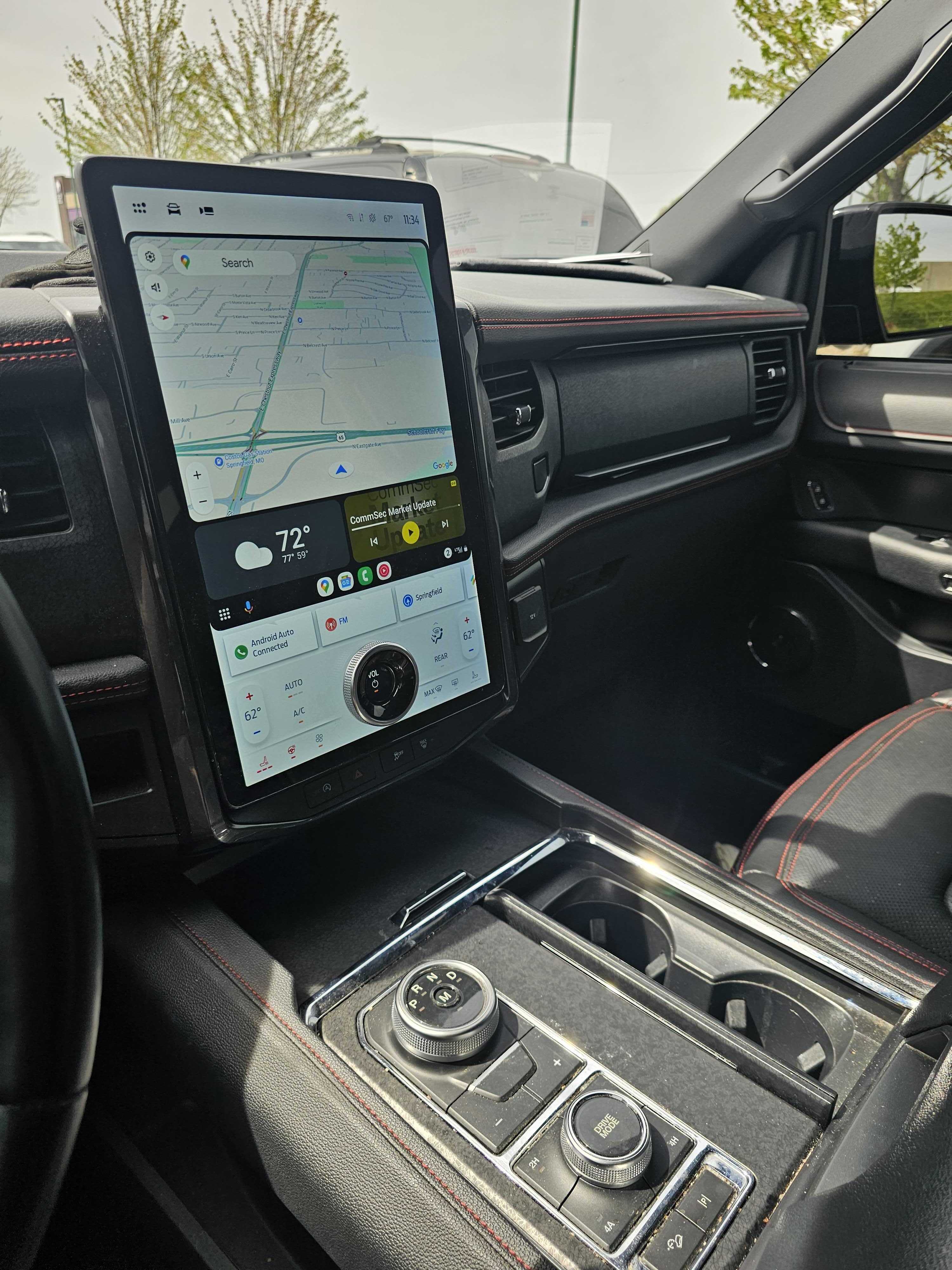
How GPS Tracking, Emergency Systems, and Modern Tech Enhance Prestige Haul's Security Services
In today's fast-paced world, security is no longer defined solely by physical presence—it's driven by technology. For professionals, executives, and high-profile clients in Springfield, MO, safe transportation requires more than a luxury vehicle and an experienced driver. It requires real-time intelligence, proactive monitoring, and advanced safety systems working seamlessly in the background.

From Springfield to Nixa, Ozark & Republic: Your Guide to Secure Travel Across the Region
Traveling throughout Southwest Missouri—whether for work, events, or personal commitments—requires more than a reliable vehicle. Increasingly, professionals, families, and high-profile individuals are recognizing the importance of secure, private transportation when moving between cities like Springfield, Nixa, Ozark, and Republic.

A Woman's Guide to Safe Transportation in Springfield: How Prestige Haul Provides Peace of Mind
For professional women in Springfield, MO, safety is more than a concern—it's a daily priority. Whether traveling for late-night work shifts, attending business meetings, going out for social events, or navigating unfamiliar areas, women often face unique challenges that require dependable and secure transportation options.

Why Private Security Transport Is Becoming Essential for Professionals in Springfield, MO
In today's fast-changing world, personal safety and privacy have become top priorities for working professionals, executives, and high-profile individuals. As Springfield, MO continues to grow, so does the need for transportation options that go beyond convenience and comfort.